
A successful commercial delivery starts well before the truck arrives.
For businesses sending furniture, cabinetry, shop fittings, appliances, palletised goods or other commercial freight, preparation can make the collection and delivery process considerably easier. Providing accurate information about the goods, dimensions, weight and delivery location helps a transport provider understand what is required before the job begins.
For businesses working with Allcare Logistics, taking a few practical steps before collection can help create a more organised transport experience.
Start by Understanding Your Freight
Before booking transport, take a moment to understand exactly what needs to be moved.
It may sound obvious, but freight can vary significantly in size, weight, shape and handling requirements. Two consignments containing a similar number of items may require completely different transport arrangements.
Businesses should consider:
- What type of goods are being transported?
- Are the goods palletised?
- How much does each pallet weigh?
- What are the pallet dimensions?
- How many pallets are being collected?
- Are any items unusually large or awkward?
- Does the freight require additional handling equipment?
Allcare Logistics’ Job Safety Analysis process specifically requests information such as goods carried, pallet weights, number of pallets and pallet dimensions.
Providing this information accurately can help the transport team better understand the job.
Accurate Dimensions Make Transport Planning Easier
Dimensions are particularly important for commercial freight.
Length, width and height can influence the type of vehicle required and how the freight can be loaded.
For example, a long item may require a different approach from several compact cartons, while bulky furniture may need more usable internal space.
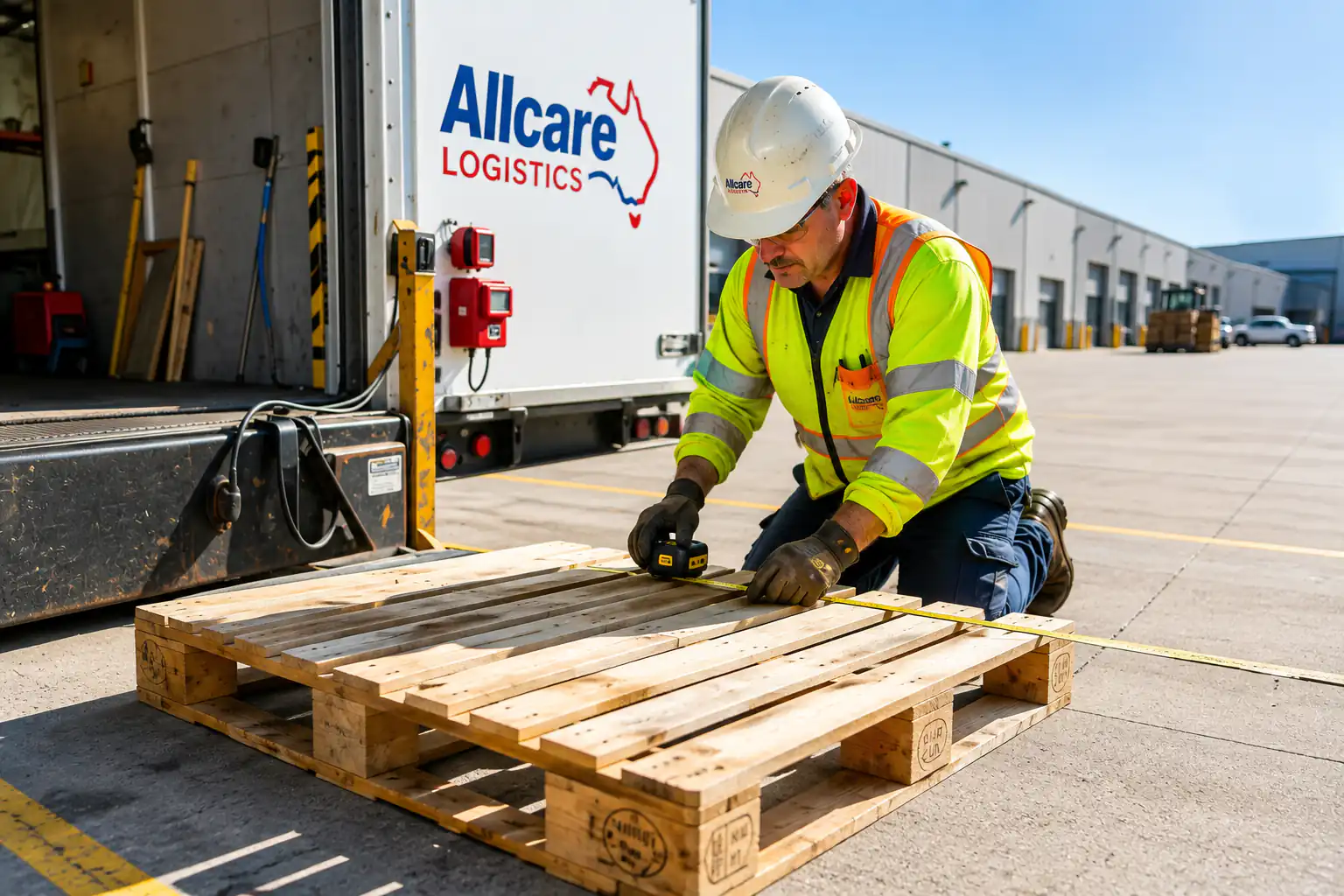
Rather than estimating dimensions, businesses should measure freight as accurately as possible.
For palletised goods, record the overall pallet dimensions rather than measuring only the individual product.
This information gives the transport provider a clearer picture before collection.
Don’t Forget the Weight
Weight is another important consideration.
A pallet that appears relatively compact can still be extremely heavy. Similarly, several smaller items can collectively create a substantial load.
Businesses should provide approximate weight information wherever possible.
Allcare Logistics’ JSA form includes fields for approximate weight per pallet, number of pallets and overall weight, helping capture important freight details before transport is arranged.
This preparation can be especially useful when heavy or awkward goods are involved.
Think About the Collection Point
Freight preparation is not only about the goods themselves.
The collection location also matters.
Before the truck arrives, businesses should consider:
- Where can the truck safely stop?
- Is there enough room for loading?
- Are there narrow access points?
- Are there height restrictions?
- Is loading equipment available?
- Does the site have particular safety requirements?
- Is there a nominated contact person?
Identifying these details beforehand can help reduce unnecessary delays.
Prepare for the Delivery Location Too
The same thinking should be applied at the destination.
A delivery may be going to a retail store, office, school, construction site, workshop or commercial premises. Each environment can have different access requirements.
Allcare Logistics’ JSA process includes fields for delivery address, site restrictions, contacts on site and PPE or White Card requirements.
Providing these details before collection gives the transport provider useful information for planning the job.
Consider the Equipment Required
Some freight may require more than a standard loading process.
Depending on the goods and site, equipment may include:
- Pallet jacks
- Panel dollies
- A-frames
- Hand trolleys
- Extra blankets
- Hydraulic tailgates
These options are included within Allcare Logistics’ transport planning information.
The key is to identify potential requirements early rather than waiting until the truck arrives.
Good Preparation Supports Better Communication
Commercial transport involves more than simply collecting goods and delivering them.
Clear communication between the customer, transport provider and delivery site can make the entire process easier.
Providing accurate freight details, contact information and site instructions gives everyone a clearer understanding of the job.
This is particularly important when the freight is time-sensitive or when multiple parties are involved.
Final Thoughts: Prepare Well for a Smoother Delivery
Good freight preparation does not have to be complicated. Accurate measurements, realistic weight information, clear access instructions and appropriate equipment requirements can make a meaningful difference.
With tailored transport services and a structured approach to gathering freight and site information, Allcare Logistics can help businesses plan their transport requirements more effectively.
If your business has an upcoming commercial delivery, contact Allcare Logistics today with your freight details and collection requirements.